
When someone you care about is grieving, it can be hard to know how to help. Many people worry about saying the wrong thing, making their pain worse, or intruding. Because of this, some people pull away or say nothing, even though support is what their loved one needs most. Grief cannot be “fixed” with the right words. What matters is being there for the griever with care, patience, and a willingness to sit with discomfort.
Grief can bring up many emotions after a loss that feel confusing or even seem to conflict, such as sadness, anger, guilt, relief, fear, numbness, or longing. All of these feelings are typical during a grief journey, which can change from day to day or even hour to hour. Being there for someone helps them feel less alone as they go through these changes. Rather than worrying about what to say, it is often more helpful to simply be with them while they grieve.
There are no perfect words to take away grief. Support is not about having the right words, giving advice, or trying to explain the loss. It is about creating a safe and caring space where grief can be felt without judgment or pressure and the griever can feel supported by those around them.
Here are some tips about how to best support someone grieving:
Show up, even if you are not sure what to say. Don’t let fear of saying the wrong thing stop you from reaching out. Simple gestures such as sending a message, sharing a meal, or just sitting together can mean a lot. You do not have to wait for the grieving person to ask for help. Often, people who are grieving are unsure of what kind of support they need or how to ask. Reaching out shows you care and reminds them they are not alone.
Continue to show up. Additionally, grief can become even stronger after the initial shock fades. Support is needed weeks and months after a loss, when many have gone back to their routines, but grief is still present. Continued support in the weeks, months, and even the years that follow reminds them that their loss still matters, even as life around them moves on. This is especially true around death anniversaries, birthdays, and holidays and having a caring person reach out to check in can mean the world to a person grieving.
Let your presence matter more than your words. Sometimes, just being there is the best support you can give. Sitting quietly, allowing tears, or sharing a calm moment can show you care without adding pressure. You do not have to fill every moment with conversation. Silence alone can be comforting when shared with kindness. People who are grieving may want to talk about their loved one, share memories, or just be quiet. Let them guide the moment and stay flexible.
Listen Without Trying to Fix. Grief is not a problem to be solved. Offering advice, explanations, or comparisons can unintentionally worsen one’s grief and make it harder to talk about. Instead, focus on listening with empathy. Allow the grieving person to share their experience without interruption, correction, or attempts to reframe their pain. Validate their emotions. Acknowledging the difficulty of the loss or recognizing how much their loved one meant to them helps normalize the grieving process.
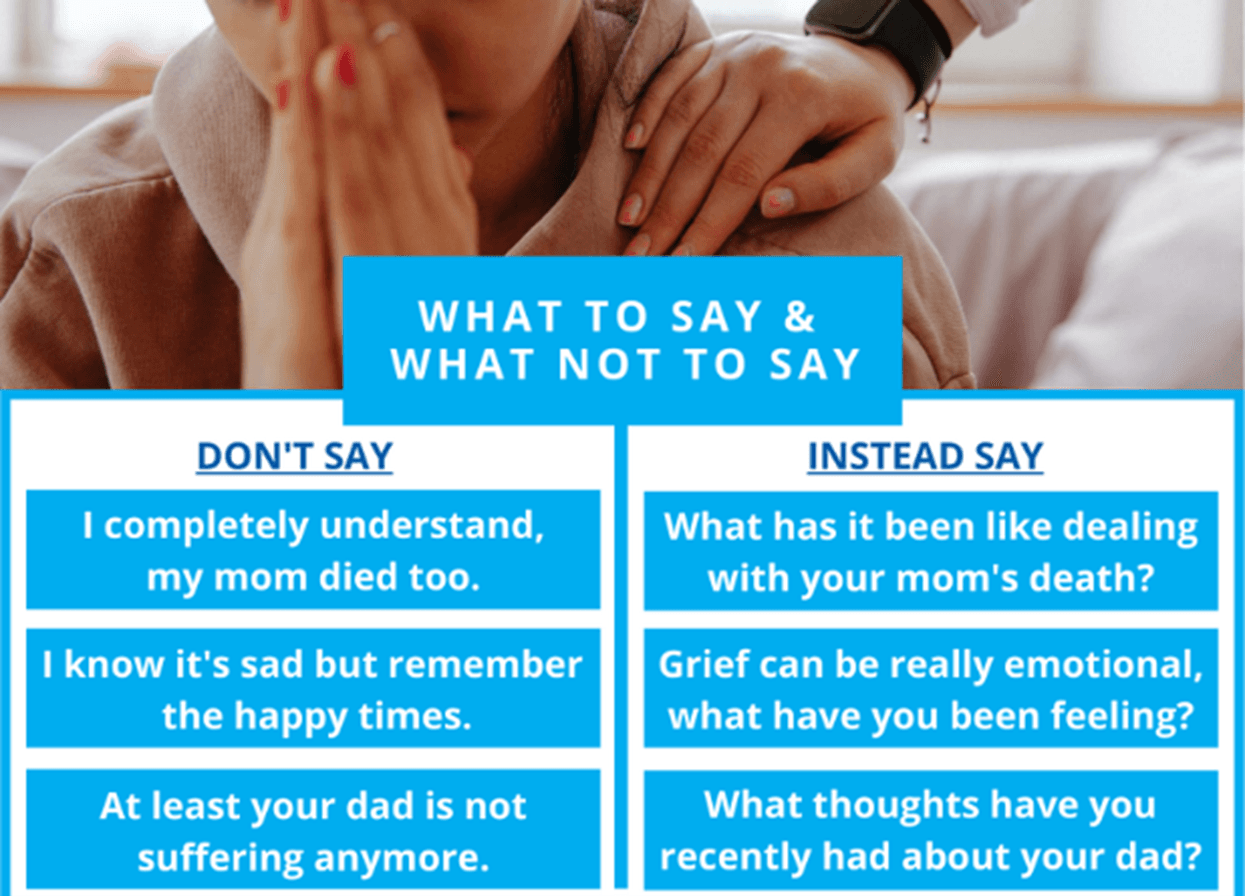
Be Mindful of Language That May Minimize Grief. There is no script for supporting someone who is grieving. However, some words can feel dismissive, even if well-intended. Trying to explain away the loss, offer silver linings, or rush the grieving process can leave someone feeling misunderstood or alone. Any phrases that begin with “at least…” often shift focus away from the pain of the loss. These statements can make it seem like one’s grief is being measured or softened. Therefore, what matters most is letting the person know you see their pain and are willing to be there with them throughout their grief journey.
Offer Practical, Specific Support. Grief can make everyday tasks feel overwhelming. Concentration, motivation, and energy may be significantly impacted. Instead of asking open-ended questions like “Let me know if you need anything,” consider offering specific forms of help. This may include bringing meals, helping with errands, assisting with childcare, offering transportation, or checking in about appointments and responsibilities. Practical support reduces decision-making demands and demonstrates care through action.
Respect the Individual Grieving Process. Finally, remember that grief is deeply personal. Grief does not follow a timeline or set of stages. Emotions can return unexpectedly, especially around anniversaries, holidays, or other meaningful dates. Be patient, non-judgmental, and avoid expectations about how long grief should last or how it should look. Continue to check in weeks, months, and even years after the loss and be ready to listen without judgment. Supporting someone who is grieving is ultimately about showing up with compassion, humility, and consistency. You do not need perfect words or answers. Your presence, patience, and willingness to sit with discomfort can offer meaningful support during one of the most difficult times in a person’s life.
Below, you’ll find examples of commonly helpful and unhelpful things to guide you in supporting someone who is grieving. These are general examples of supportive language for times when you may feel unsure of what to say, not strict rules to follow. Grief is deeply personal, and the most meaningful support is thoughtful, flexible, and guided by the individual’s needs.
For additional resources and articles on discussing loss with children, as well as practical self-care strategies for grieving individuals and supporters, visit our website at liftfromloss.org. Additionally, information about our Grief-Informed Training Series is also available on our website for those seeking to strengthen their skills in supporting grieving individuals and communities. These resources are designed to help you feel more prepared, informed, and supported when responding to grief.
The Children's Bereavement Center “CBC” is a 501(c)(3) nonprofit organization providing FREE grief support groups for all ages (4+). Lift From Loss® is a division of CBC providing support for young adults and adults. To register for our free grief support groups, call us at (888) 988-5438 or e-mail support@childbereavement.org.