
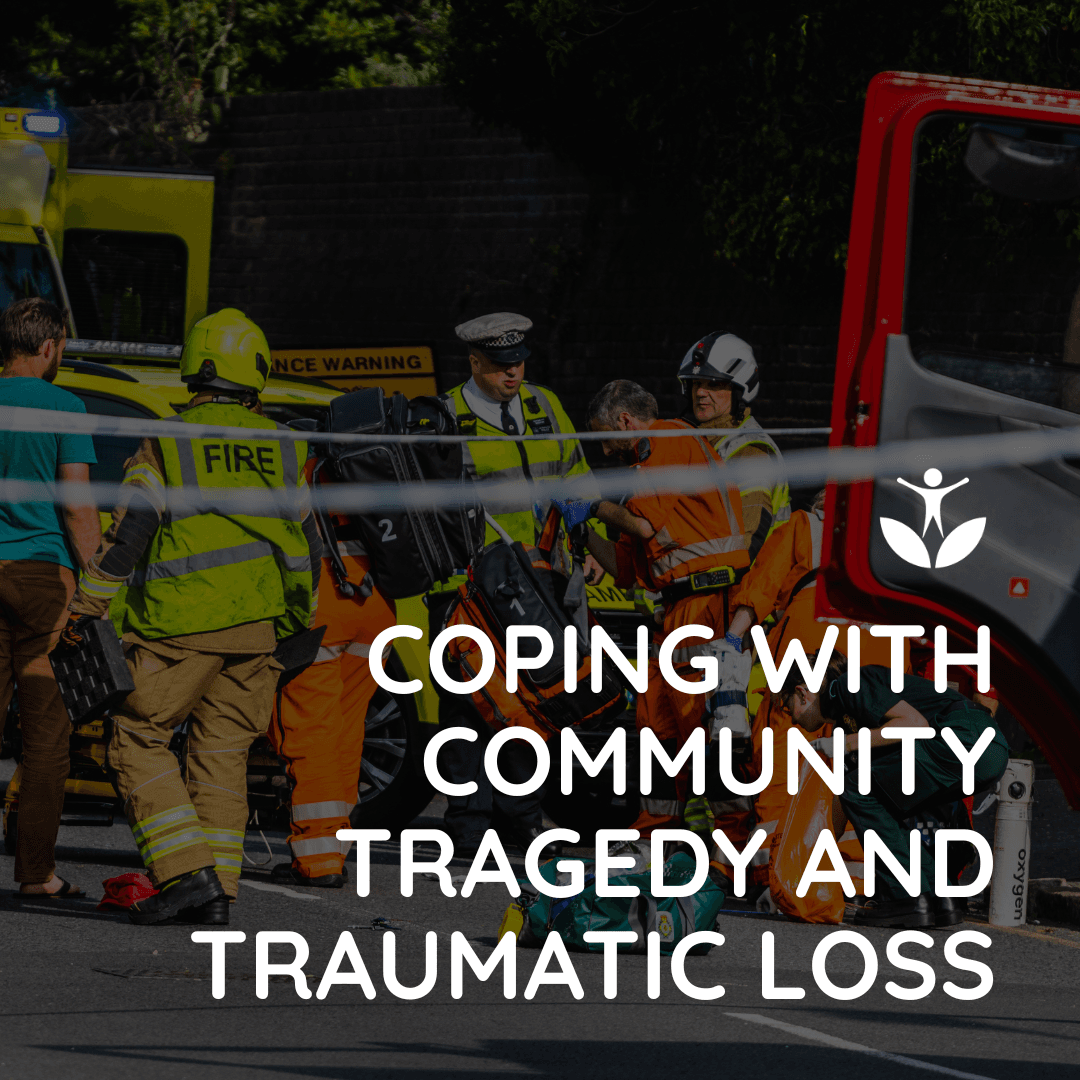
When tragedy strikes, the grief is felt not only by individuals but by everyone connected to that community. These events can stir feelings of sadness, disbelief, and fear, and may leave people feeling unsafe or hypervigilant. For some, they also bring up deep feelings of injustice, adding extra layers of pain to an already heavy loss. Whether you are mourning someone close to you or sharing in the collective grief of your community, it is important to remember that your responses are valid and that support is available.
Common Responses to Crises
After a traumatic loss, many people replay the details and ask painful questions that have no clear answers. Feelings of guilt or self-blame can also surface, even when you are not at fault. These heavy thoughts are a normal part of grieving, and they often appear alongside emotional and physical changes.
Common responses may include:
Anxiety, sadness, guilt, anger, or shock
Trouble sleeping or changes in appetite
Physical distress such as stomach pain or muscle tension
Difficulty concentrating or making decisions
Feeling on edge or easily startled
It is also important to be mindful of media exposure. After a tragedy, constant exposure to news and social media can intensify grief and create a sense of helplessness. Therefore, limiting exposure to news or social media can ease some of the stress and allow you to care for yourself and your loved ones during this time.
Warning Signs and Seeking Additional Support
Recognizing the signs of distress in oneself or others is crucial after a traumatic loss. Some warning signs to look out for include:
Pulling away from friends, family, or usual activities
Significant changes in eating or sleeping
Increased anger, irritability, or agitation
Ongoing difficulty focusing or making decisions
Thoughts of self-harm or suicide
Thoughts or plans to harm others
Risk-taking or reckless behavior
If you or someone you know is experiencing any of these signs, it is crucial to seek help immediately by calling 911 or 988. In moments of crisis, especially when self-harm or suicidal thoughts arise. You can reach the National Suicide Prevention Lifeline by dialing 988. Building a broader support network can also be valuable. This might involve connecting with a therapist for individual counseling or joining a support group where others can empathize and understand the grief experience.
Ways to Support Yourself or a Loved One
Lean on others: Allow yourself to reach out to family, friends, or trusted community members. Grief is heavy and is not something you have to experience alone. Sharing the weight you feel bearing down on you with others can bring comfort.
Take one step at a time: Even small tasks can feel impossible when you are grieving. Whenever possible, break things down into smaller, more manageable steps, and give yourself permission to go at your own pace. If returning to school or work feels overwhelming, consider easing back in gradually with support from others.
Care for your body and mind: Simple routines, such as mindful breathing, stretching, journaling, or taking short walks, can help you find small moments of steadiness when emotions feel overwhelming.
Make space to remember: Whether through sharing stories, lighting a candle, attending a vigil, or gathering with others, finding ways to honor your loved one helps keep their memory alive.
Create a safety plan if needed: If reminders of the loss feel overwhelming, it may help to write down coping strategies, calming activities, and the names of people you can call when overwhelming emotions surge.
Healing after a traumatic loss takes time, and no one should face it alone. Support can come in many forms, whether it is leaning on family and friends, finding comfort in faith or community spaces, talking with a counselor, or joining one of our grief support groups. While every grief journey is personal, connection reminds us that we do not have to carry the weight of loss by ourselves.
The Children's Bereavement Center “CBC” is a 501(c)(3) nonprofit organization providing FREE grief support groups for all ages (4+). Lift From Loss® is a division of CBC providing support for young adults and adults. For additional resources and articles on a variety of subjects, visit our website at liftfromloss.org. To register for our free grief support groups, call us at (888) 988-5438 or e-mail support@childbereavement.org.