
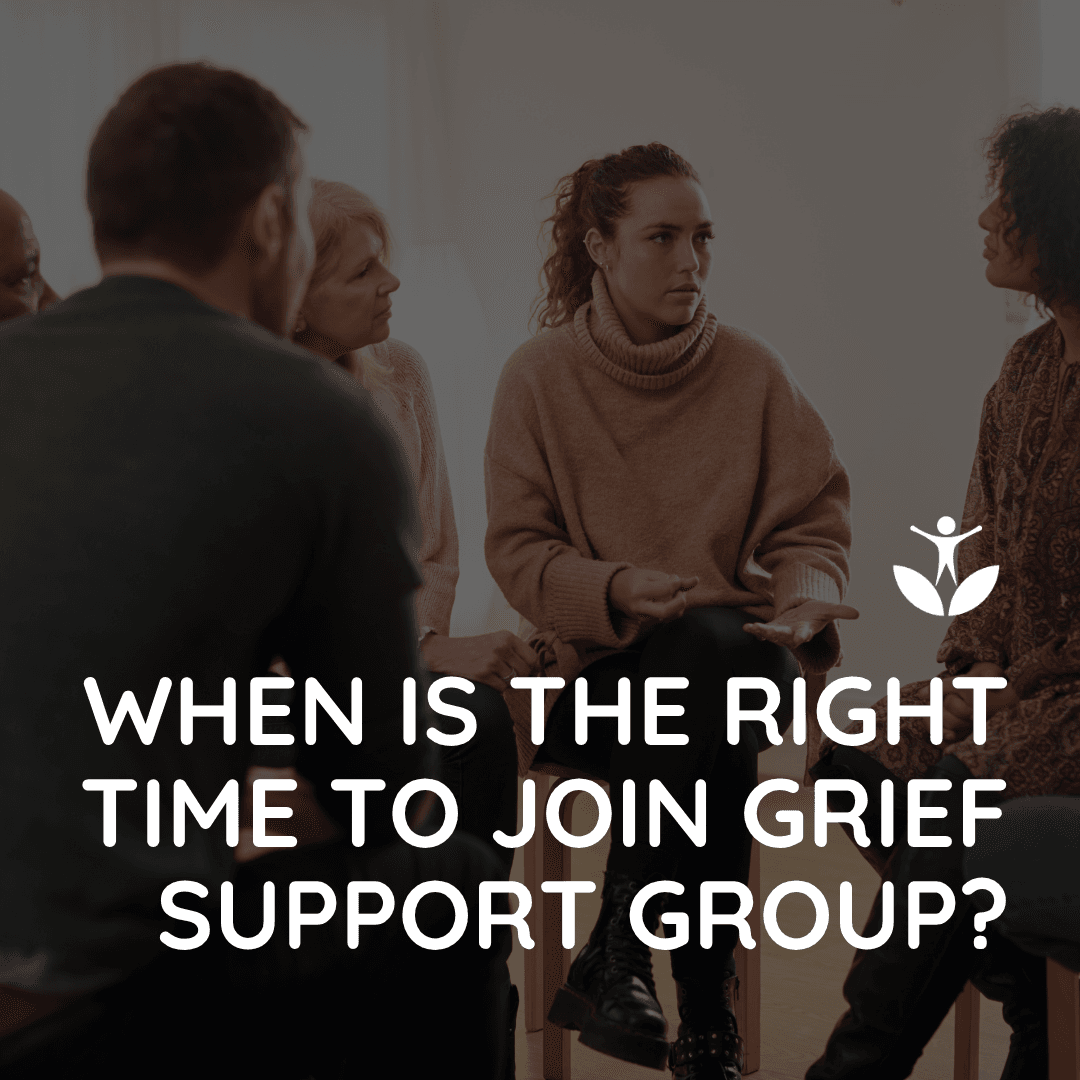
When someone we love passes away, many people wonder, “When is the right time to join a support group?” How long should I wait? A week? A month? Is it too soon or too late?
The answer to these questions is not always straightforward, as it varies from person to person. Grief does not follow a strict timeline, and neither does the timing of support. However, it is important to consider when a support group might be the right choice for you, as it depends entirely on you, your relationship to the person you lost, your support system, your personality, and how you process pain, among many other factors. Some people find it helpful to join a support group immediately after their loss, while others may need more time and might join months or years later.
At CBC, we do not set a required waiting period before someone can join one of our support groups. For some people, the days immediately following a loss are exactly when they need connection most. The world can suddenly feel very quiet and isolating, especially after the initial calls, visits, and arrangements have quieted down. Being in a space with others who understand that particular ache, without needing to explain it, can be a lifeline in those early days.
On the other hand, for some individuals, the early weeks are filled with logistical considerations related to rituals or finances, as well as feelings of numbness and the initial shock of their loss. They may need time alone to process their thoughts due to the intensity of their pain. It is completely valid for them not to feel ready to discuss their loss with others until months or even years later. Understandably, joining a grief support group and openly sharing painful details about the death and their grief experience can feel extremely daunting.
A 2001 bereavement study explored when bereaved individuals chose to participate in support groups and found that readiness mattered far more than the amount of time that had passed since the death. While some participants felt that joining in the first few weeks after their loss was exactly what they needed, others felt overwhelmed by the initial shock of their grief and were not ready until months later. The researchers concluded that there is no single timeline that works for everyone, and that each person's grief journey is unique.
The study also highlighted that for many, taking that initial step can bring up a wave of emotions. Simply registering for a support group, entering the space, or hearing others talk about loss can make the reality of the loss feel more present. For some, this can feel intimidating or emotionally overwhelming, especially if they have spent time trying to avoid or contain their grief. As a result, some people may choose to wait until they feel more prepared to sit with those emotions in the company of others.
Therefore, the conversation about when to join a grief support group ultimately comes down to readiness. So, how do you know when you are ready to join a peer grief support group? Readiness is deeply personal and looks different for everyone. That being said, there are a couple of considerations we recommend you keep in mind before joining. Ask yourself a few gentle questions:
Am I seeking connection with people who understand what I am going through?
Am I comfortable listening to other people's grief stories, even if I am not ready to share my own?
Do I feel emotionally able to sit with difficult feelings, knowing they may come up during or after a group?
Am I hoping for support and understanding, rather than expecting someone to "fix" my grief?
If I attend one group and it does not feel like the right fit, am I willing to try another or come back at a different time?
As you reflect on these questions, consider what you hope to gain from a support group. Are you looking for a place to share your story, simply listen to others, feel less alone, or connect with people who understand your experience? It can also be helpful to think about how you typically process difficult emotions. Some people find healing by talking through their experiences, while others prefer more time before opening up. What feels right is entirely up to you.
Remember that every support group has its own facilitators, group members, and atmosphere. If one group does not feel like the right fit, it does not necessarily mean support groups are not for you. It is also important to remember that grief support groups are not the same as therapy. While some groups are facilitated by licensed mental health professionals, their primary purpose is to provide peer connection and help guide conversations related to grief.
If you are seeking more personalized guidance, individual counseling or therapy may be a more appropriate next step. A therapist can offer one-on-one attention and help you work through complicated grief in a more structured way, if needed. Some people attend individual therapy and a grief support group because they receive different types of support from each setting.
Ultimately, the best time to join a grief support group is when you feel ready to explore the possibility of connecting with others in your grief journey. It also makes sense if you attend and realize the timing is not quite right. You can always return when it feels like a better fit. Grief changes over time, and your needs may change with it.
Citations
Picton, C., Cooper, B. K., Close, D., & Tobin, J. (2001). Bereavement Support Groups: Timing of Participation and Reasons for Joining. OMEGA - Journal of Death and Dying, 43(3), 247-258.
The Children’s Bereavement Center ofrece grupos de apoyo de compañeros GRATUITOS para niños, sus familias y adultos después de una muerte. Para obtener información o participar en nuestros grupos de apoyo de compañeros CBC gratuitos, comuníquese al 888-988-5438 o support@childbereavement.org